
· by Michael Blair, Nashville's Drainage and Excavation
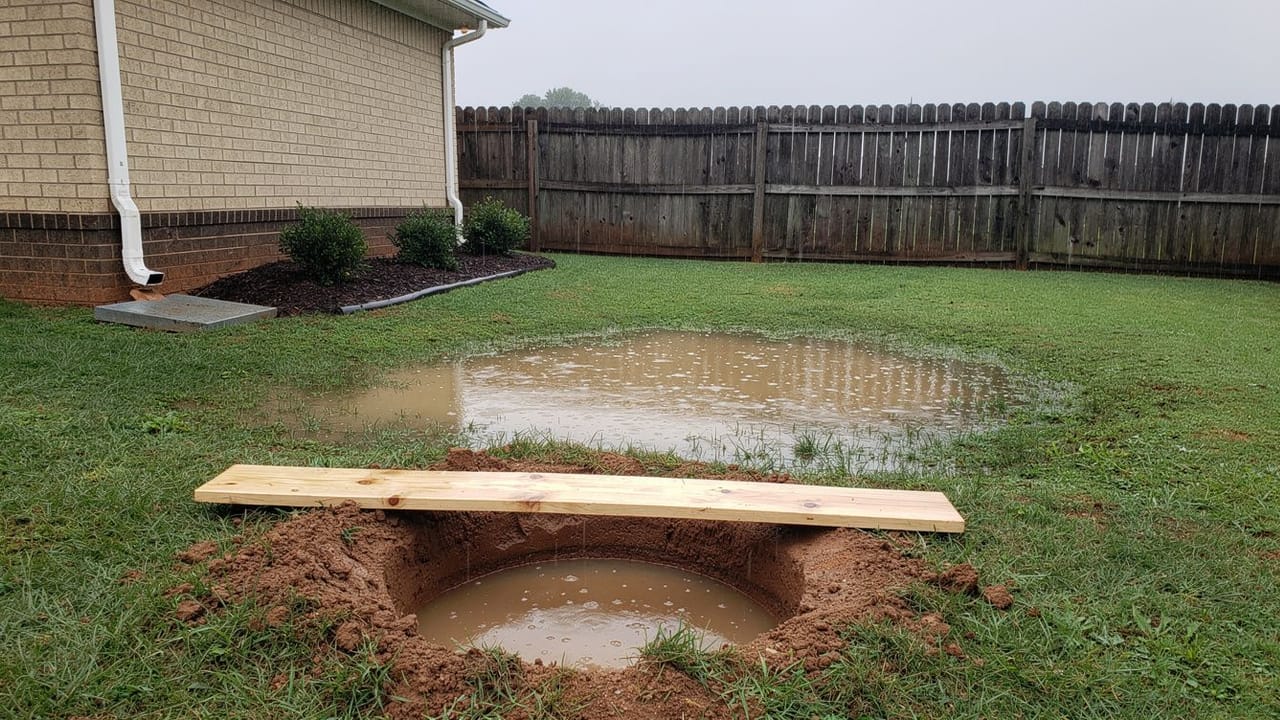
Every drainage design depends on somewhere lower for the water to go. The residential code opens its drainage section the same way: section R401.3 of the 2024 International Residential Code says surface water is to be diverted to a storm sewer or another approved point of collection that doesn’t create a hazard. On a flat Middle Tennessee lot on clay, finding that point is the whole problem, and it’s the first thing we look for on a site visit.
Which way should the ground slope around a house?
The ground should fall away from the house. R401.3 sets the minimum at 6 inches of fall within the first 10 feet, and where walls, lot lines or slopes make that impossible it calls for drains or swales to carry the water away instead. Patios and walks inside those 10 feet are to slope at least 2 percent away from the building, and Metro Codes adopted the 2024 International Codes for Davidson County in July 2025. On older lots we often find the grade has drifted since the house was built: beds settle, fresh mulch goes on every spring, and a border creeps up a few inches at a time until the slope runs back toward the wall.
So grade is what we check before anyone prices pipe. When the slope is the fault, fixing it deals with the cause, while a drain only handles water the yard keeps sending at the house. That work is our yard grading service, and building fall back against a settled wall has its own post on regrading around a foundation.
How do you find where the water goes on a lot?
Watch during a real storm instead of guessing. UT Extension’s homeowner guide to rain gardens puts the same step ahead of any building: go out while it’s raining and note where runoff comes from, how it crosses the property and where it finally goes. Look for where it ponds, where it runs, what comes over from the neighbor uphill and where it leaves your lot.
A walk around the yard in the rain tells you more than an afternoon with a tape measure on a dry day.
- At least 6 inches of fall in the first 10 feet, where the lot allows
- Watch the lot during actual rain
- Confirm a lower outfall exists before pricing a drain
- Move the downspout water first
- Clay drains slowly — test it before relying on it
Roof water first
A roof collects the rain falling on its whole area and hands it to a few downspouts, so each one can dump a lot of water on a small patch of ground beside the foundation. The same UT guide names downspout extensions and splash pads as a way to steer that runoff away from a structure.
We look at the downspouts before we suggest anything bigger, and piping them clear of the house is sometimes all a lot needs.
The flat lot problem
With no lower ground, a French drain has nowhere to send what it collects, so the trench fills and stays full. Davidson County deals with this directly: Metro Nashville’s residential stormwater guidance allows only the daylighted version in residential work, with the perforated pipe open at its downstream end so large storms can overflow and the system still works if the soil takes in less than expected. That outlet has to sit more than ten feet from the property line.
The workable options on a flat lot are a properly sized dry well or regrading to create fall, and where neither is possible we talk through pumping the water up to somewhere it can drain. Where a pump does the work, our post on sump pumps and where they discharge covers getting its line out to lower ground and why we add a battery backup. The same Metro guidance places a dry well at least 10 feet from the foundation and 10 feet from the property line, keeps it off septic fields and buried utilities, and sizes it from the drainage area and how fast the soil takes water.
That rate is the catch on clay. The TDOT drainage manual puts clay, silty clay and clay loam in hydrologic soil group D and repeats the federal TR-55 note that silts and clays generally have low infiltration rates. Metro sizes residential infiltration features for an assumed 0.25 to 0.50 inches per hour, and its simple test, a hole filled to six inches three times over, passes the soil only if the third fill drops at least half an inch an hour. Soil that fails may rule a dry well out altogether, which is why we test before we price one; our post on dry wells, rain gardens and Nashville clay goes further into sizing.
If a drain quote doesn’t say where the water comes out, ask before you sign it, or tell us about your lot for a free estimate and we’ll start with the outfall.
Sources
- International Code Council, 2024 International Residential Code, R401.3 Drainage — Surface water to an approved point of collection; grade falls at least 6 inches in the first 10 feet; drains or swales where barriers prevent it; impervious surfaces sloped 2 percent away
- Metro Nashville Codes, Metro Adopts 2024 International Building Codes (July 23, 2025) — Davidson County adopted the 2024 International Codes by BL2025-898, signed July 16, 2025
- UT Extension, W1137 Rain Gardens for Tennessee: A Homeowner’s Guide (2023) — Go out when it rains and note where runoff comes from, flows and goes; downspout extensions and splash pads guide runoff away from structures
- Metro Nashville and Davidson County, Stormwater Management Manual Volume 1, Appendix D (2026) — Only daylighted French drains in residential work; outlet more than ten feet from the property line; dry well setbacks and sizing; 0.25 to 0.50 in/hr assumed rate; the three-fill infiltration test at 1/2 inch per hour
- TDOT Design Division Drainage Manual, Chapter 4 (2021) — Clay, silty clay and clay loam in hydrologic soil group D; silts and clays generally have low infiltration rates (quoting TR-55)
FAQ
Where Water Should Go on a Nashville Lot — questions
How much should the ground slope away from the house?
The 2024 International Residential Code, which Metro Nashville adopted in 2025, calls for at least 6 inches of fall within the first 10 feet, with drains or swales where walls or lot lines make that impossible. On older lots we often find beds that have settled or been built up with mulch until the slope runs back toward the wall, which can put water against a foundation that used to stay dry.
Will a French drain fix a flat yard?
Not on its own. A French drain moves water to a lower point, so with nowhere lower to go it fills and stays full. In Davidson County, Metro’s residential stormwater guidance allows only the daylighted kind, with the pipe open at its downstream end. On a flat lot the workable answers are usually a dry well sized for the soil or regrading to create fall, and we talk through pumping when neither is possible.
Does clay soil affect drainage solutions?
Substantially. Clay accepts water slowly, so anything relying on infiltration, such as a dry well or a rain garden, has to be sized for a low rate. Metro sizes residential features for 0.25 to 0.50 inches per hour, and soil that drops less than half an inch an hour on the third fill of its test hole will not work for them. Test first, because a design that assumes faster soil backs up here.
How can I tell where water goes in my yard?
Go out during a real storm and watch, the step UT Extension’s rain garden guide puts ahead of any building. Note where the runoff starts, how it crosses the lot, where it ponds, what arrives from the neighbor uphill and where it finally leaves. A dry-day walk with a tape measure misses most of that.