
· by Michael Blair, Nashville's Drainage and Excavation
A wet spot in the lawn that is still squishy days after the last rain is a sign that water is arriving there faster than it can leave. The work is figuring out where it comes from, because the fix for a low spot does nothing for a leaking pipe, and a French drain dug through a broken sewer line only spreads the problem. Five sources account for nearly every wet spot we are called to look at in Middle Tennessee. Each one leaves its own clues, and most of them can be read from the yard before anyone digs.
Rain that collects in a low spot or comes off the roof
The first test is the weather. A spot that is wet after every storm and dries out after a week of sun is surface water, and it comes from one of two places. The first is a low spot in the grading, a dip where the lawn settled over an old trench, a filled stump hole or loose fill against the house. Water runs to it and stops, and our clay soil takes it in slowly. Lay a long straight board across the spot, or run a string line between stakes, and the dip shows. Near the house, the model code sets the standard: the 2018 International Residential Code, R401.3 says the grade should fall at least 6 inches within the first 10 feet away from the foundation. That is a model-code figure. Local adoption varies, but it is a fair test of whether the ground is doing its job.
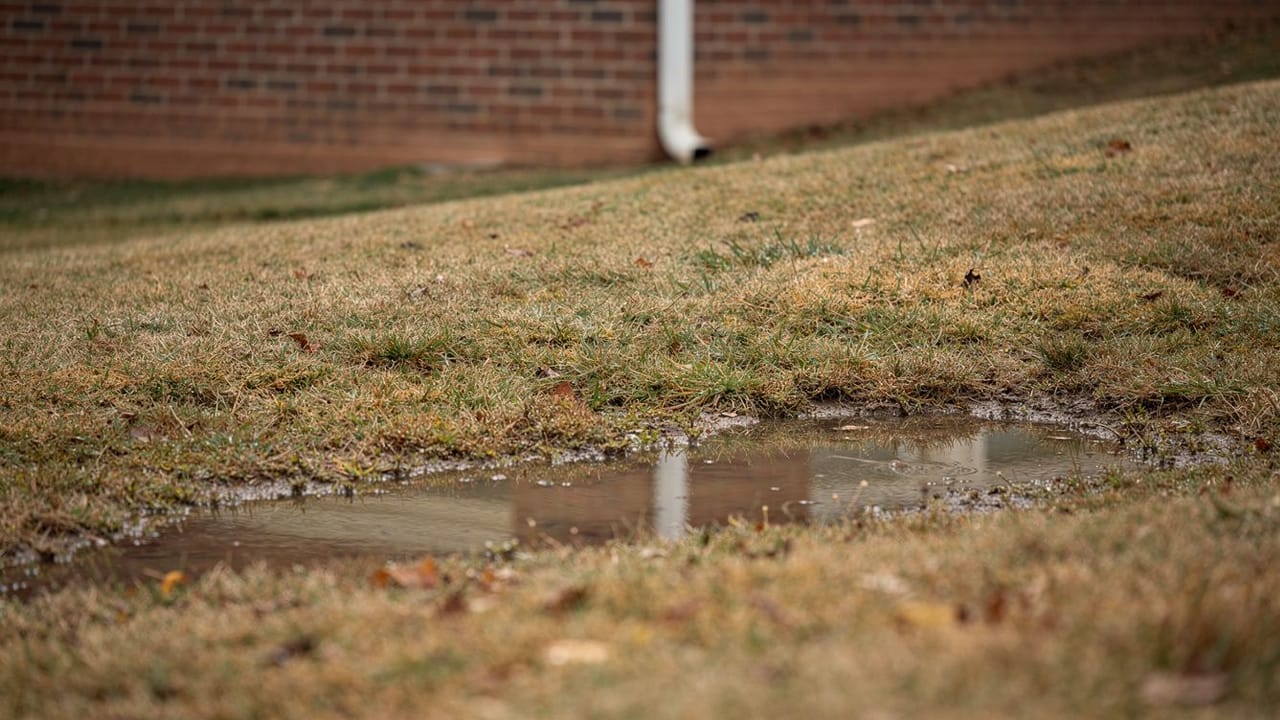
The second is roof water. A wet spot that sits a few feet out from a downspout, or along the path water takes from it, is fed by the roof, and a roof sends a large volume of water to one corner in a hard rain. The University of Minnesota Extension recommends that downspouts discharge at least 4 feet beyond the wall. If an extension is missing or short, or it empties into a dip, the lawn there will stay soft. Where the downspout feeds a buried line, a soggy strip partway along its route usually means the pipe is broken, and testing a buried downspout line shows where.
The fixes are direct. A low spot is filled and the surrounding ground reshaped so water has a path off the lot, which is what our yard grading work does. Roof water is carried farther out, either with a longer extension or a downspout drainage line piped to a place where it can leave the yard.
Water from a pipe, not the sky
A spot that stays wet through a dry spell is not rainwater. The most common source is a leak in a pressurized line: an irrigation lateral, a sprinkler head that has cracked below grass level, or the water service line between the meter and the house. These spots are often wettest right over the line, may be cold to the touch in summer, and sometimes come with a patch of grass that grows faster than the rest.
The water meter settles it. EPA WaterSense suggests reading the meter before and after a two-hour period when no water is used in the house; any change likely means a leak. Run the test with the irrigation system off, then again with it on standby, and you will know which side the leak is on. EPA notes that an irrigation leak about the thickness of a dime can waste about 6,300 gallons a month, so a small break can keep a large patch of lawn wet.
The fix is to repair the line, not to drain the spot. Draining it hides the leak while the water bill keeps climbing. We excavate to expose the break so the line can be repaired, and we restore the ground afterward.
When the wet spot smells or sits over a sewer or septic line
A wet spot with an odor, or one that sits over the route of the sewer line or a septic field, needs a different kind of attention. For homes on septic, the EPA septic system FAQ lists standing water or damp spots near or over the tank or drainfield, sewage odors there, and bright green, spongy grass over the drainfield even in dry weather as signs of failure. Slow drains, backups and gurgling in the house point the same way.
On city sewer, a leaking lateral can do the same thing between the house and the street. In Davidson County, the Metro Water Services private sewer service policy says the property owner owns and is responsible for the service line from the building to the public sewer main. A camera run down the line from a cleanout finds the break, and the repair is a dig to that spot.
Do not regrade over this kind of wet spot or put a drain under it. That moves sewage around the yard instead of stopping it. Find the line, find the break, and repair it first. Then deal with any grading damage the leak left behind.
Ground water that comes up from below
Some wet spots have nothing to do with the roof or a pipe. They stay damp for weeks after the rain stops, sit at the bottom of a slope or where the ground changes pitch, and the meter shows no leak. In our experience, these are seeps: ground water moving downhill through the soil and coming out at the surface where the slope flattens, or water held on top of a dense clay layer or shallow rock that it cannot soak through. The USGS study of karst aquifers in Tennessee describes the inner Nashville Basin as having thinner soils over limestone. On a lot like that, there is not much depth for water to soak into before it meets rock.
A seep is the case where a drain earns its cost. A French drain dug across the slope above the wet spot intercepts the water before it surfaces and carries it to an outlet. Where water pools on the surface as well, a catch basin in the low point can tie into the same pipe. The outlet has to be somewhere the water can actually go, and where water should go on a Nashville lot covers how we decide that.
Any of these fixes means digging, and Tennessee law requires notice before that. Per the Tennessee 811 FAQ, anyone digging, homeowners included, must give at least three working days’ notice, and an excavator you hire needs a ticket in its own name. If you are not sure which of the five you have, ask us for a free estimate and we will walk the spot with you.
Sources
- International Residential Code 2018, R401.3 Drainage (via UpCodes) — Grade to fall at least 6 inches within the first 10 feet from the foundation (model code).
- University of Minnesota Extension, Moisture in basements: causes and solutions — Downspouts should discharge at least 4 feet beyond the wall.
- EPA WaterSense, Fix a Leak Week — The two-hour water meter test; an irrigation leak the thickness of a dime wastes about 6,300 gallons a month.
- EPA, Frequent Questions on Septic Systems — Signs of a failing septic system, including damp spots and spongy green grass over the drainfield.
- Metro Water Services, Private Sewer Service Policy — The property owner owns and maintains the sewer service line to the public main.
- USGS, Characteristics of Karst Aquifers in Tennessee (WRIR 97-4097) — Thinner soils over limestone in the inner Nashville Basin.
- Tennessee 811, Frequently Asked Questions — Three working days’ notice before digging; applies to homeowners; hired excavators need their own ticket.