
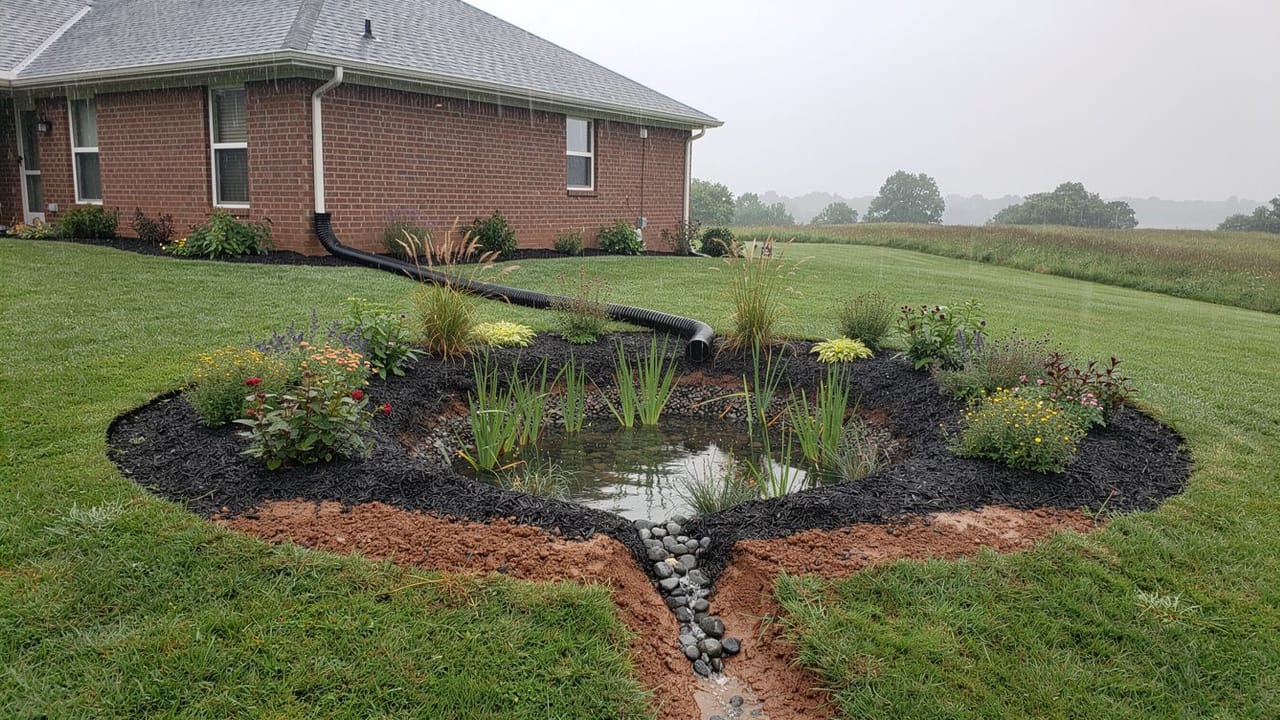
· by Michael Blair, Nashville's Drainage and Excavation
Infiltration puts water into the ground instead of carrying it somewhere else, and EPA’s page on stormwater drainage wells names the buried versions: dry wells, bored wells and infiltration galleries. All of them need ground willing to take the water. Much of what we dig in around Nashville is clay, and we never assume it will drink until a test in that exact spot says so. Where it won’t, the water has to be moved instead, the subject of our post on where water should go on a Nashville lot.
How do you test soil for a dry well?
We dig a test hole where the dry well or garden would sit. UT Extension’s homeowner guide, Rain Gardens for Tennessee, gives the method: a hole about a foot across and a foot deep, filled and left to drain twice so the soil is primed, then filled a third time and timed. Under 24 hours, the guide calls the soil fast draining. Between 24 and 48 hours it is slow draining, still usable once the soil is amended, and it says to scrape the shovel-smoothed sides of the hole, particularly in clayey soil.
A hole that won’t drain at all is the real warning. UT’s answer is to dig deeper and test again or choose another site, and to move on as well if the digging hits rock or the water table. So the test takes a day or two, which is a short wait next to digging out a dry well that never empties.
How is a dry well sized for clay soil?
A dry well has to hold a storm’s runoff long enough for the soil around it to take the water in, so its size comes from the rate the test measured. Metro Water Services’ Low Impact Development Manual sizes infiltration trenches the same way, from how much of the drainage area is paved or roofed and the subsoil infiltration rate, and it bars them outright at 0.5 inch per hour or less. That cutoff is written for regulated development, not one house, but the point carries: below some rate, a bigger hole only stores water longer.
The manual also notes that karst is found across much of Middle Tennessee and says infiltration practices shall not be used anywhere with a high risk of sinkholes. It wants 2 feet between the bottom of a trench and bedrock or the seasonally high water table, and it rules trenches out in fill soil. For spacing, it puts them at least 25 feet from a building foundation, 100 feet from a water supply well and 50 feet from a septic system, and UT’s guide keeps a rain garden at least 10 feet from buildings.
There is a permit side too. EPA classes stormwater drainage wells as Class V wells, authorized by rule so long as they do not endanger underground sources of drinking water, and TDEC’s underground injection control page says anyone who discharges stormwater into a subsurface system is required to submit an application. We look at what applies to the lot before a dry well is dug.
- A drain-time test in the spot itself before designing anything
- Size from the measured rate, not generic figures
- Well clear of the foundation, 25 feet by Metro’s trench minimum
- Rain gardens need the right plants and 4 to 5 inches of ponding depth
- An overflow route for storms that exceed the design
Rain gardens
UT’s guide describes a rain garden as a planted depression placed to catch runoff and soak it into the ground. It gives 4 to 5 inches as a good bowl depth for a home garden, dug to about 8 inches so 3 inches of mulch fits on top. Where the soil is tight or compacted, it says to till down to 6 inches and amend with washed sand or low-nutrient compost, so the amending is for slow ground rather than every garden. The guide also says to keep one out of stream buffers, floodplains, forests and wetlands, and to call 8-1-1 to have utilities marked first, which our post on what to do before any excavation starts walks through.
The plant list matters because the bowl is not one condition. UT describes three rings: the outer edge, highest and driest, a middle ring, and the low center that stays wet longest. It recommends native perennials of the kind found along streams and in floodplains, which survive both wet and dry soil and, once established, need no fertilizer or extra watering.
Why does a dry well need an overflow?
Any infiltration system will eventually meet a storm bigger than the one it was built for, so where that water goes should be settled on paper first. UT calls for a spillway cut into the rain garden’s berm, about a foot wide and sunk about an inch, so overflow from large rains goes safely back to a drainageway. Metro’s manual says trenches that take runoff directly should always include an overflow structure to carry larger storms safely through.
We route that overflow downhill and away from the house, to a swale, a ditch or a pipe like the ones on our downspout drainage page. Where the test says the ground will not take water at all, that piping becomes the whole plan instead of the backup. If you want us to run the test on your lot and tell you which it is, ask us for a free estimate.
Sources
- US EPA, Stormwater Drainage Wells — Dry wells, bored wells and infiltration galleries are Class V stormwater drainage wells used for subsurface infiltration; authorized by rule if they do not endanger underground sources of drinking water
- UT Extension, W 1137 Rain Gardens for Tennessee: A Homeowner’s Guide (2023) — Infiltration test method and 24 and 48 hour thresholds; dig deeper or move if it does not drain; 4 to 5 inch bowl depth; amending tight soil; 10 feet from buildings; three planting zones; native perennials; overflow spillway; call 8-1-1
- Metro Nashville Stormwater Management Manual, Volume 5: Low Impact Development Manual — Trench sizing by subsoil infiltration rate; no trenches at 0.5 in/hr or less, in fill soils or high sinkhole risk areas; 2 feet to bedrock or water table; 25, 100 and 50 foot setbacks; overflow structure; test with 24 hour presoak and one-hour readings
- TDEC, Underground Injection Control Permit — Anyone who discharges stormwater into a subsurface system is required to submit a UIC application
FAQ
Dry Wells, Rain Gardens and Nashville Clay — questions
Do dry wells work in clay soil?
Sometimes. Tight clay takes water slowly, so the size has to come from a drain-time test in the spot where the well would go, not from a generic figure. Metro’s Low Impact Development Manual bars infiltration trenches where the measured rate is 0.5 inch per hour or less and keeps them out of fill soil and areas with a high sinkhole risk, and below a rate like that a bigger well only holds water longer.
How do I do a percolation test?
UT Extension’s rain garden guide lays it out: dig a hole about a foot across and a foot deep, fill it and let it drain twice to soak the soil, then fill it again and time how long it takes to empty. Under 24 hours is fast draining, 24 to 48 hours is slow and calls for amending the soil, and a hole that does not drain means digging deeper and testing again or picking another spot. Metro’s manual for regulated projects uses a stricter version, with a 24 hour presoak and four one-hour readings.
Are rain gardens practical in Middle Tennessee?
Yes, where the test shows the soil will drain. UT Extension’s guide calls for a bowl about 4 to 5 inches deep, tilling and amending soil that is tight or compacted, and native perennials of the kind that grow along streams and in floodplains, since the low center stays wet longest and the outer ring stays driest. It also says to keep the garden at least 10 feet from buildings and out of stream buffers, floodplains and wetlands.
How deep should a dry well be?
Deep enough to hold a storm’s runoff while the soil takes it in, which the measured drain rate decides, but not so deep that it closes on rock or ground water. Metro’s Low Impact Development Manual keeps 2 feet between the bottom of an infiltration trench and bedrock or the seasonally high water table.